
Restore Range of Motion and Get Back to Moving Well
Restricted movement and chronic soft tissue pain rarely resolve on their own — and adjustments alone don't always reach the root of the problem. Instrument assisted soft tissue mobilization (IASTM) gets into the connective tissue where most treatments stop.
What Is Instrument Assisted Soft Tissue Mobilization?
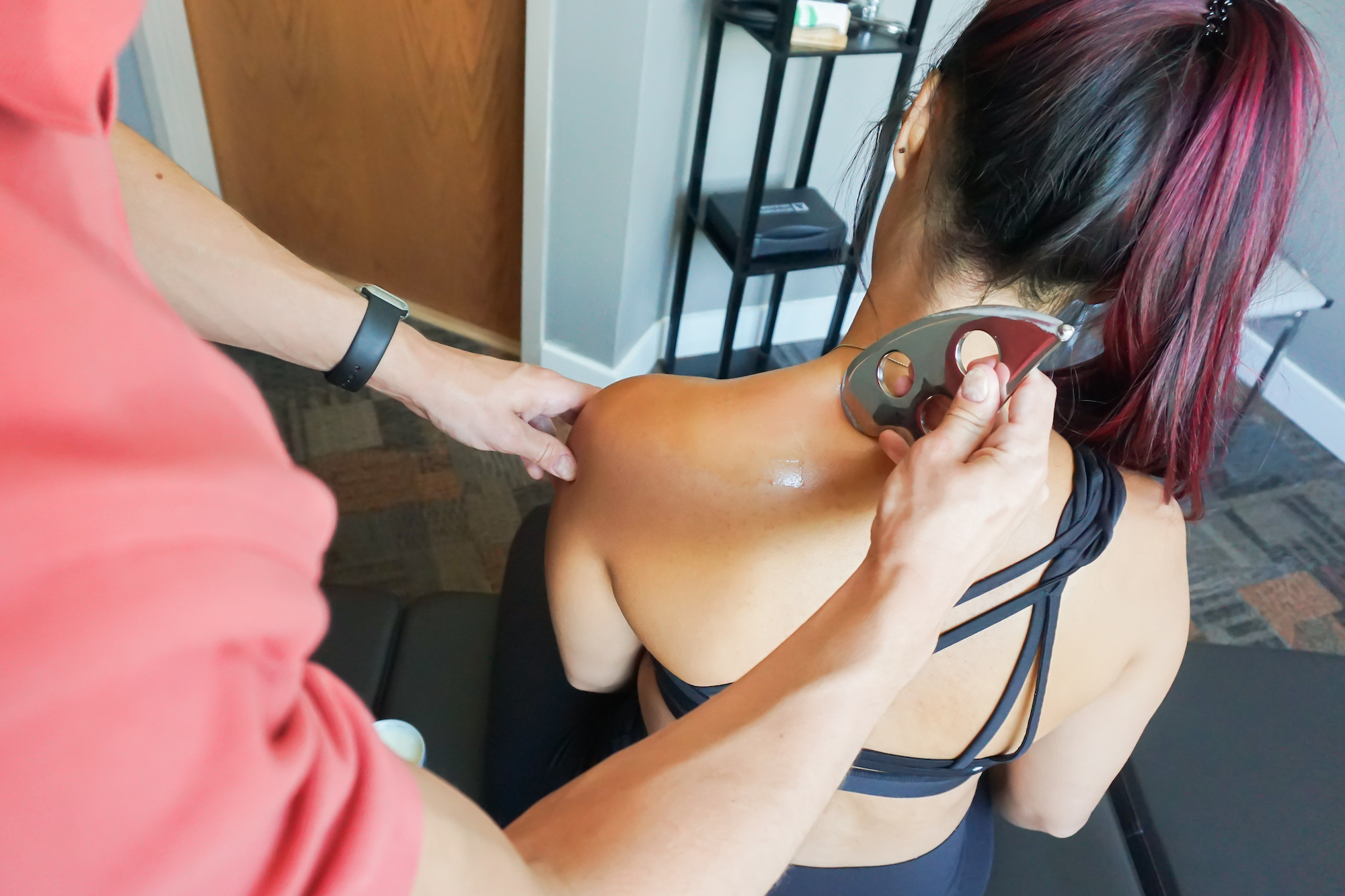
IASTM uses specially designed stainless steel tools to detect and treat areas of restricted fascia, scar tissue, and adhesion within muscles and tendons. The instruments allow Dr. Benjamin to feel subtle changes in tissue texture that hands alone often miss, and to apply precise, controlled pressure to break up that restriction at its source.
The result is improved circulation to the affected area, a controlled healing response from the body, and — over a course of treatment — noticeably better range of motion and less pain with movement.
Who Benefits Most from IASTM?
IASTM is effective across a wide range of patients and complaints. It's particularly well-suited for:
- Athletes dealing with tendinopathy, IT band tightness, or recurring soft tissue injuries
- Workers in trades and physical labor who carry chronic tension in the shoulders, forearms, or lower back
- Anyone recovering from a sprain, strain, or surgical procedure where scar tissue has formed
- Patients whose pain or stiffness hasn't fully responded to adjustments alone
- Moms navigating postpartum recovery, including tension from nursing posture and carrying
If movement feels stuck and the problem seems to live in the tissue rather than the joint, IASTM is often the missing piece.
Part of a Whole-Body Treatment Plan
At Enhance Life Chiropractic, IASTM is rarely used in isolation. Dr. Benjamin integrates it with chiropractic adjustments, corrective exercise coaching, and other therapies like kinesiotaping and electrical stimulation based on what your body actually needs that day.
That means your soft tissue work and your spinal care are coordinated by the same provider who knows your full history — not handed off between staff members or siloed into separate appointments.
Every visit includes hands-on time with Dr. Benjamin. No rotating staff, no guesswork about what was done last time.
Common Questions About IASTM
Moving Beyond Pain to Enhance Life.
Does IASTM hurt?
Some patients feel mild discomfort during treatment, particularly in areas with significant scar tissue or restriction. Dr. Benjamin adjusts pressure based on your tolerance and what the tissue is communicating. Any soreness after a session typically resolves within a day or two, similar to how muscles feel after a deep stretch or workout.How is IASTM different from a regular massage?
Massage works primarily on muscle tissue through manual pressure. IASTM uses rigid instruments to address fascial adhesions and scar tissue at a depth and precision that hands can't consistently replicate. It's a clinical technique targeting specific mechanical restrictions, not general relaxation or circulation work.How many sessions does it take to see results?
Most patients notice improved range of motion within the first few sessions. Significant or long-standing restrictions typically respond over a course of four to eight visits, depending on how chronic the issue is and how well it's supported by the rest of the care plan. Dr. Benjamin will give you a realistic timeline after your initial assessment.Is instrument assisted soft tissue mobilization covered by insurance?
Coverage varies by plan. Dr. Benjamin's office can review your benefits and walk you through what to expect before your first visit. Same-day appointments are available, so you won't wait long to get answers.Can IASTM help with old injuries that never fully healed?
Yes — this is one of the most common reasons patients seek it out. Scar tissue from injuries that healed months or years ago can continue to restrict movement and cause pain. IASTM is specifically designed to address that kind of chronic, residual restriction.